

Great sound is not only engineered. It is also designed.

Design Is Not Decoration
In audio equipment, design is often misunderstood.
Some people think design means appearance: the color, the shape, the finish, or whether a product looks good on a shelf. But in serious audio, design is not decoration. It is the bridge between sound, function, emotion, and daily use.
A product can have strong specifications and still feel difficult to live with. It may sound impressive, yet be hard to place, confusing to control, visually heavy, or disconnected from the home. On the other hand, a well-designed audio product makes technology feel natural. It invites use. It reduces friction. It makes listening easier to begin and more satisfying to repeat.
That is why design matters in audio equipment.
Because people do not only listen with their ears. They also listen through touch, space, ritual, and memory.

Good Design Improves Usability
The best audio products remove hesitation.
Where should I place the record?
Which button should I press?
Can I use it without reading a manual?
Does it feel safe, stable, and intuitive?
These questions matter because audio equipment often asks users to interact physically. A turntable requires placing a record. A CD player requires inserting or displaying a disc. A speaker may need to fit into different rooms and routines.
Human-centered design focuses on making systems usable and useful by understanding users, their needs, and their context. ISO 9241-210 describes human-centered design as an approach that applies usability and ergonomics knowledge across the life cycle of interactive systems. (ISO)
In audio, this means every detail has a purpose: the height of a button, the resistance of a knob, the visibility of a display, the stability of a lid, the clarity of a control layout.
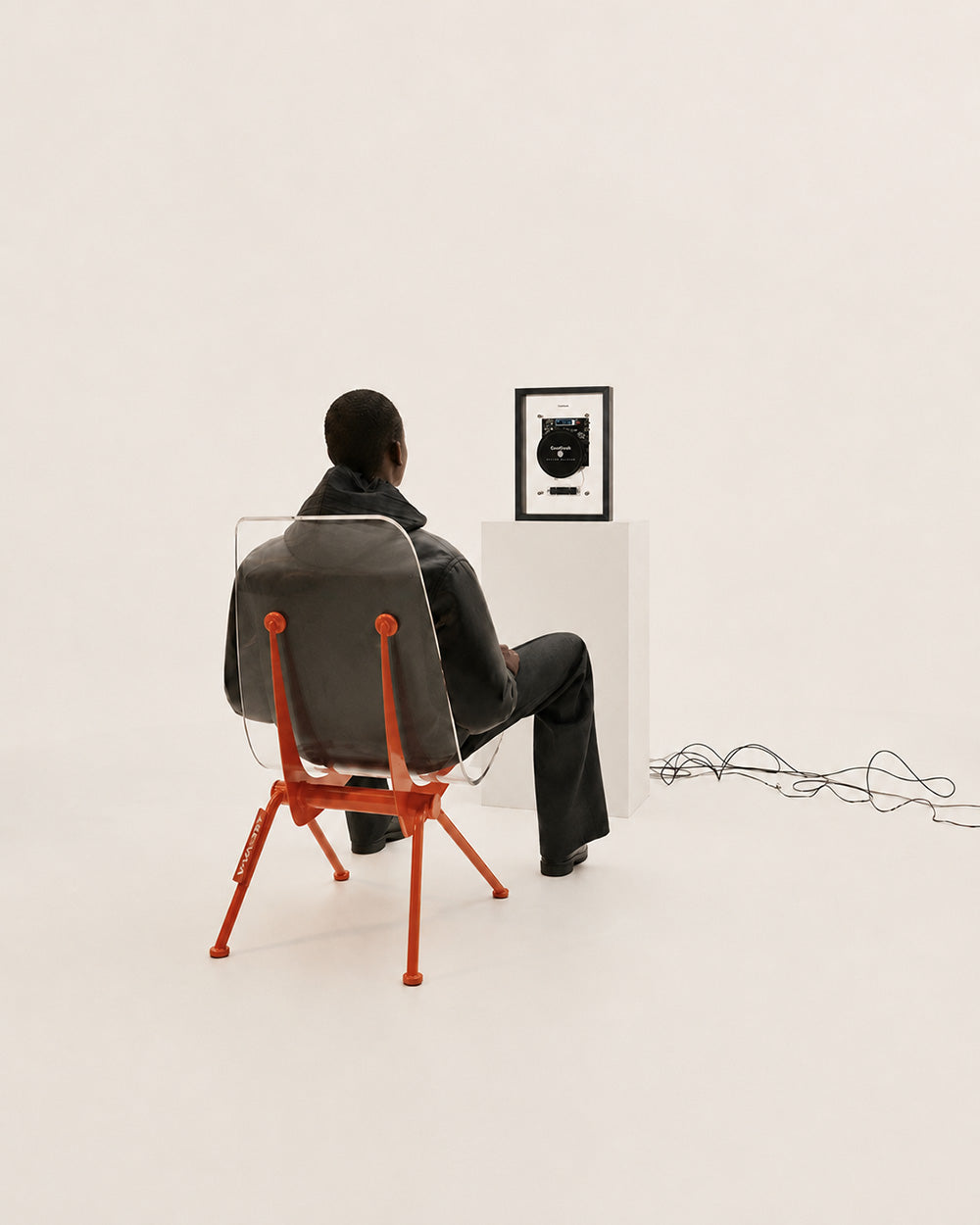
A product like M1 is not only a CD player. Its design changes how people approach a CD: the disc becomes visible, framed, and easy to understand. A turntable like TS-01 should make the listening ritual feel clear, calm, and intentional rather than technical or intimidating.
Good design does not ask the user to adapt to the machine.
It helps the machine adapt to life.

Aesthetics Change the Experience
Sound quality is essential, but the way a product looks and feels also shapes how people experience it.
Nielsen Norman Group describes the aesthetic-usability effect as the tendency for people to perceive attractive products as more usable; users often believe things that look better will work better. (Nielsen Norman Group) This does not mean beauty can replace engineering. It means that visual clarity, proportion, and material confidence can reduce resistance and make a product feel easier to welcome into daily life.
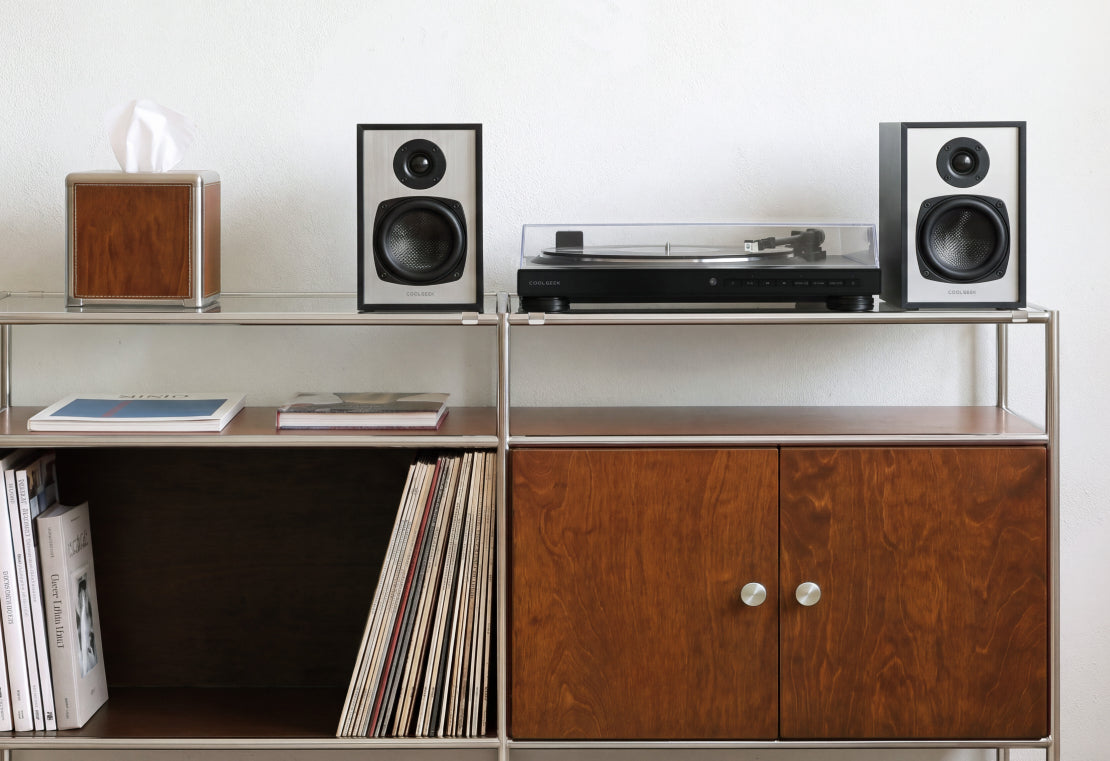
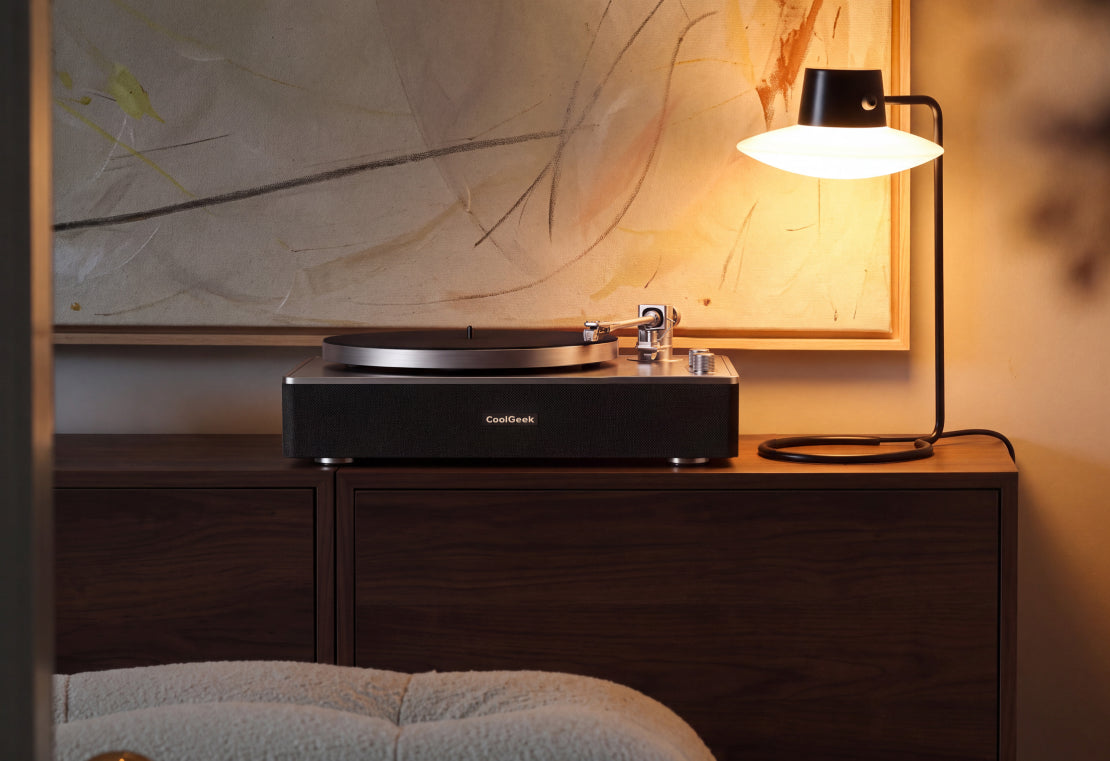
Audio products live in visible spaces. They sit on shelves, tables, walls, cabinets, and listening corners. If they look too technical, many people hide them. If they look considered, people are more likely to keep them present.
This is why CMF — color, material, and finish — matters. Matte surfaces feel calmer than glossy plastic. Aluminum suggests precision. Wood and fabric soften a product’s presence. Acrylic can make a mechanism feel lighter and more transparent.
For COOLGEEK, this design direction appears across products such as M1, VS-01, VS-02, and R1, where audio is treated not only as equipment, but as something that can live naturally with people.

Design Supports Better Listening Habits
A good product does more than perform. It changes behavior.
If a record player is easy to approach, people play records more often.
If a CD is visible, people remember the album.
If a speaker fits naturally into a room, people use it in more moments.
This is where design becomes part of the listening experience. It creates ritual.
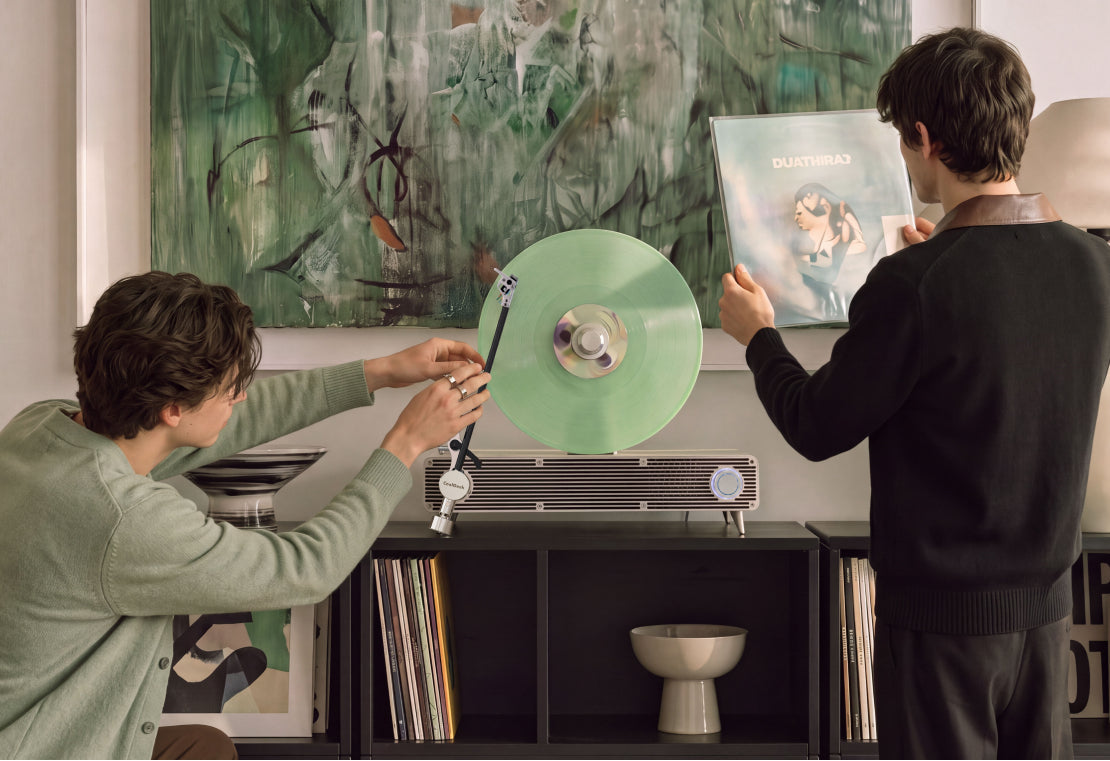
A vertical turntable like VS-01 makes the record visible while it plays, turning music into both sound and motion. M1allows the CD to remain present even when playback stops. VS-02 can support more casual daily listening, while R1 feels closer to a furniture companion than a black electronic box.
Each product solves a different listening behavior. But the design question is the same:
How can audio become easier to start, easier to enjoy, and easier to keep using?

Design Also Builds Trust
Design is not only emotional. It also has business value.
McKinsey’s research on the business value of design found that companies with top-quartile McKinsey Design Index scores achieved 32 percentage points higher revenue growth and 56 percentage points higher total returns to shareholders growth over a five-year period compared with industry counterparts. (McKinsey & Company)
This does not mean design alone guarantees success. But it shows that design-led thinking can create measurable value when it is connected to user needs, product experience, and business strategy.
For audio brands, trust is especially important. Customers are not only buying a device. They are buying something that will sit in their home, shape their routines, and become part of how they experience music.
When design feels careless, trust weakens.
When design feels thoughtful, trust grows.

The Future of Audio Is Designed Around People
The next generation of audio equipment should not only chase louder sound, more features, or more technical claims.
It should ask better questions.
Where does this product live?
How does someone begin using it?
Does it make music feel closer?
Does it reduce friction?
Does it deserve to stay visible?
Great audio equipment is the result of engineering discipline and design empathy working together. Engineering makes sound possible. Design makes the experience meaningful.
That is why design matters.
Because the best audio products do not simply play music.
They make music easier to approach, easier to love, and easier to live with.

Share:
Why Furniture Is Becoming the New Home Audio System
Why Three Devices Became One