

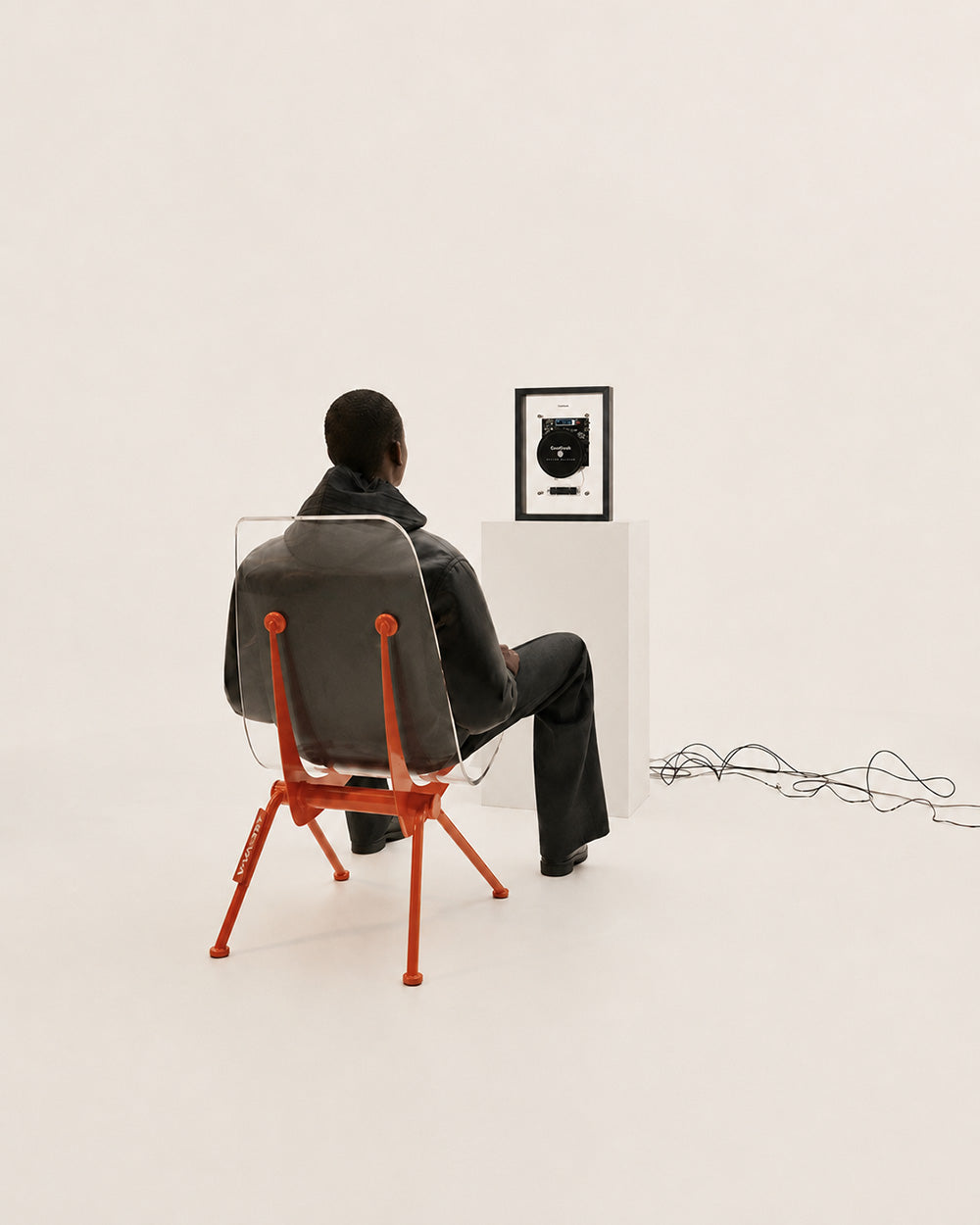
Home audio is moving from isolated equipment to objects that live inside the room.

Audio Is Moving Into the Furniture
For decades, home audio had a familiar structure.
There was a speaker in one place, an amplifier in another, a player on a shelf, and a mess of cables trying to connect everything together. The system sounded good, but it often felt separate from the room.
That idea is changing.
Today, people want music everywhere, but they do not always want traditional audio equipment everywhere. They want sound in the kitchen, beside the sofa, near a reading chair, on a shelf, or around a dining table — without turning the home into a showroom of black boxes.
This is why furniture is becoming the new home audio system.
The shift is not only about hiding speakers. It is about rethinking where sound should live. A table can become a speaker. A shelf can become a music station. A lamp can carry sound. A wall object can display and play a CD. The home itself becomes the listening environment.
IKEA’s SYMFONISK collaboration with Sonos is one clear example of this direction, placing Wi-Fi speakers into forms such as floor lamps, table lamps, picture frames, and bookshelf units so sound can blend into the home. (IKEA)

From Equipment to Everyday Object
Traditional audio products often ask for a dedicated place.
A special rack.
A technical shelf.
A central listening position.
A fixed setup.
Furniture works differently. It already belongs to daily life. A side table sits beside the sofa. A shelf organizes objects. A cabinet shapes the rhythm of a room. A lamp creates atmosphere.
When audio enters these forms, music becomes easier to live with.
A product like R1 is especially meaningful in this context because it does not behave like a conventional speaker box. It has the language of furniture: a rounded tabletop, fabric texture, wood-like legs, and a shape that can live beside a sofa or chair. It can support the room visually while also bringing sound into it.
This is different from simply placing a speaker on furniture.
It means audio is becoming part of the furniture layer of the home.

Furniture Solves the Placement Problem
One of the hardest parts of home audio is placement.
Great sound needs the right position, but real homes are full of compromises: limited space, existing furniture, cables, children, pets, visual clutter, and changing routines.
Furniture-based audio solves this problem by starting where people already live.
Instead of asking users to make room for a speaker, it lets sound come from places that already make sense: the side table, the shelf, the wall, the media console, or the music corner.
This matters because smart speakers and connected audio are now normal parts of home life. Edison Research reported that in 2025, 35% of the U.S. population 16+ owned a smart speaker, while the U.K. reached 45% ownership. (Edison Research at SSRS) As audio becomes more common in the home, the question is no longer only “how does it sound?” but also “where does it belong?”

The Shelf Becomes a Music Station
A shelf is no longer just storage.
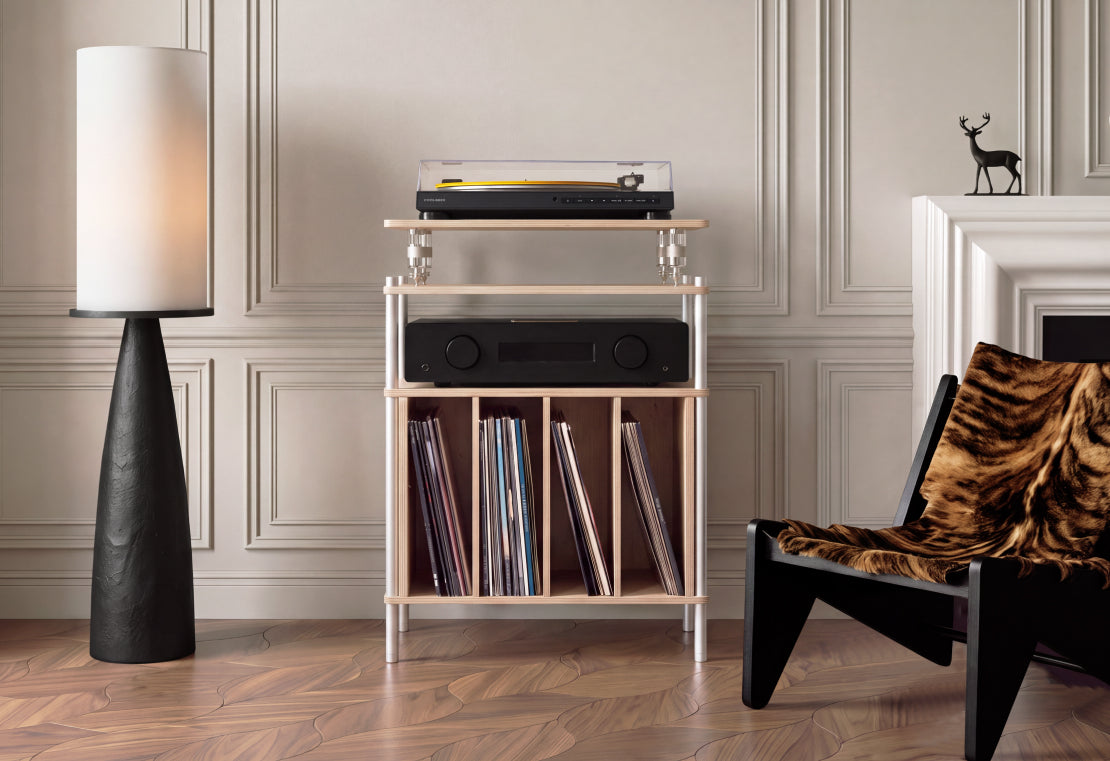
For many people, it holds records, CDs, books, photos, plants, objects, and memories. When audio joins this shelf, the shelf becomes a small music station.
This is where M1 fits naturally. Instead of hiding a CD mechanism inside a cabinet, it makes the disc visible. It turns the player into something closer to a framed music object. The result is not simply a CD player placed on a shelf; it is a way to let music stay present even when nothing is playing.
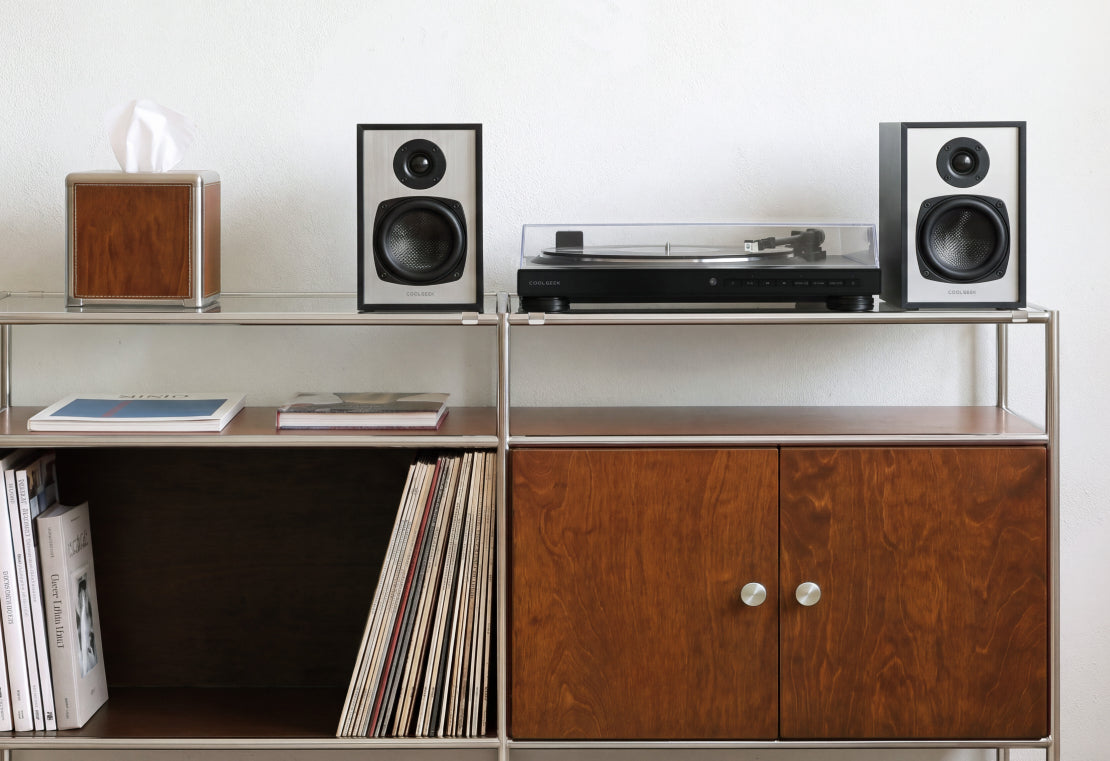
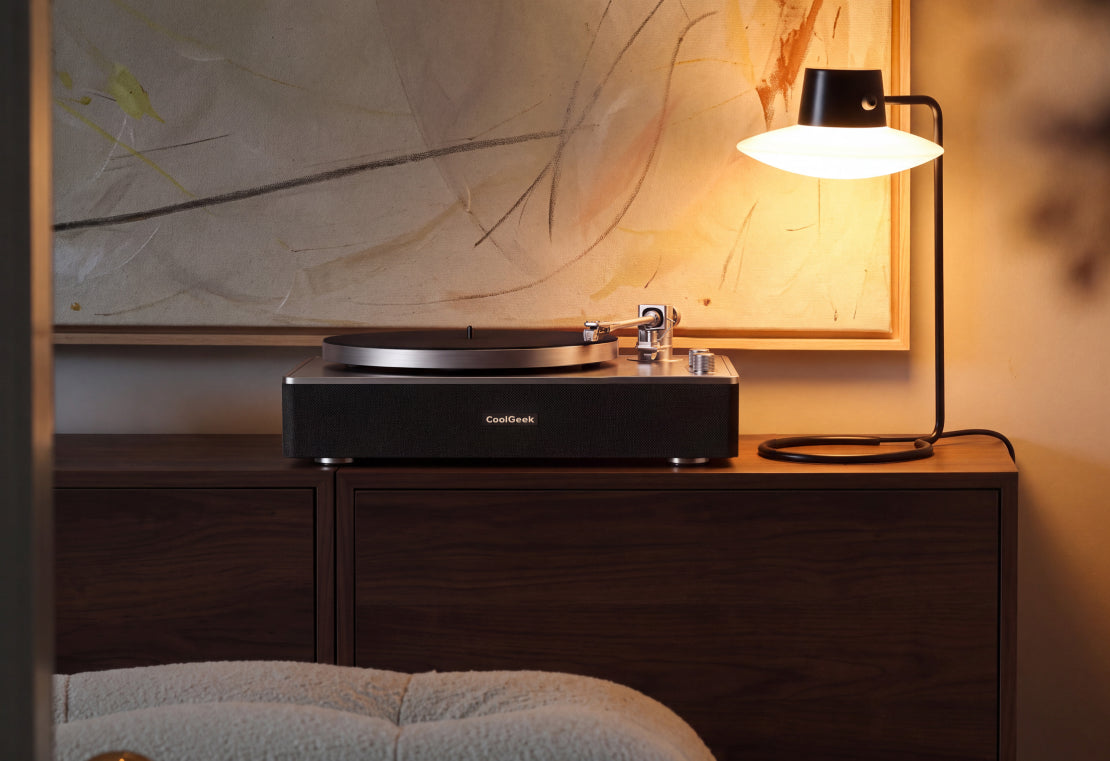
A turntable like TS-01 can serve a similar role on a console or sideboard. It turns the furniture surface into a listening surface — a place where choosing, placing, and playing music becomes part of the room’s rhythm.

Better Design Means Longer Use
Furniture-based audio also points to a more responsible product future.
When products feel temporary, people replace them quickly. When products become part of the home, people are more likely to keep them, repair them, and live with them longer.
This matters because electronic waste is growing rapidly. The Global E-waste Monitor 2024 reported that the world generated 62 million tonnes of e-waste in 2022, and that this could rise to 82 million tonnes by 2030. (E-Waste Monitor)
Audio products cannot solve this alone. But better design can encourage longer ownership. If an audio product feels like furniture — useful, visible, stable, and emotionally acceptable — it has a better chance of staying in use.

The Future Is Not a Bigger Speaker
The future of home audio may not be a larger speaker or a louder system.
It may be a better relationship between sound and space.
Music will come from objects that already belong in the home: tables, shelves, frames, lamps, consoles, and quiet corners. The best systems will not always announce themselves as technology. They will simply make the room feel more alive.
Furniture is becoming the new home audio system because people do not want to choose between good sound and a comfortable home.
They want both.
And when audio becomes part of the furniture, music becomes easier to start, easier to share, and easier to keep close.

Share:
The One Music Player Every Generation Can Enjoy
Why Design Matters in Audio Equipment