

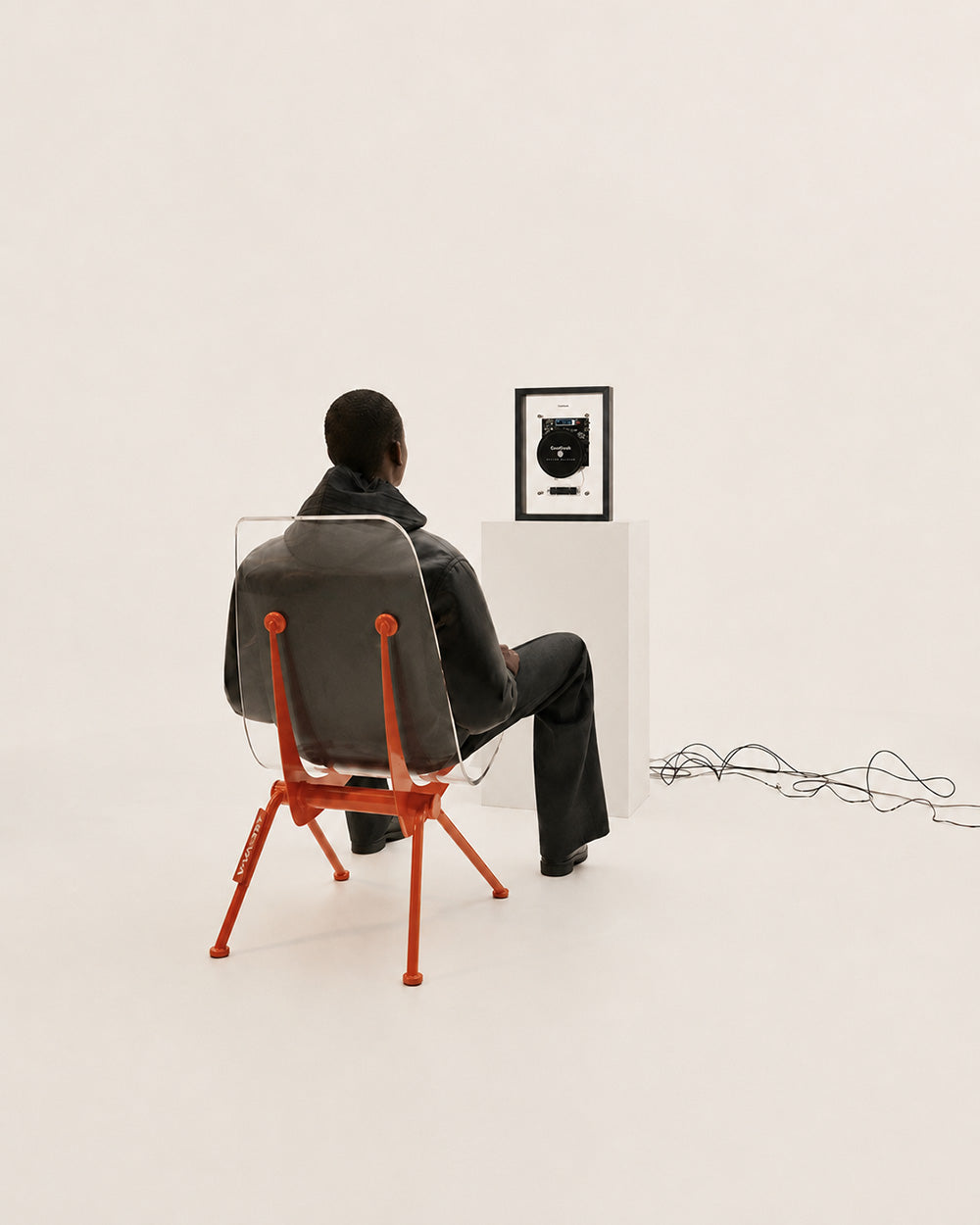
 Music Should Not Be Hidden Away
For a long time, audio products were treated as technical equipment.
They were placed on shelves, pushed into cabinets, or hidden beside televisions.
The goal was often simple: make the sound good, but make the object disappear.
But the way people live at home has changed.
Today, people care deeply about the atmosphere of a room. They choose furniture, lighting, materials, artwork, plants, and objects that express who they are. A living room is no longer just a place to sit. It is a personal space, a visual identity, and a reflection of lifestyle.
So why should music remain hidden?
Music is emotional. It shapes mood, memory, rhythm, and daily rituals. If music has such a strong presence in our lives, the products that bring it into the room should also have a thoughtful physical presence.
Great audio design should not only be heard.
It should also belong.
 From Equipment to Living Object
Traditional audio products often look like machines first and home objects second.
Black boxes. Sharp edges. Large screens. Complicated controls. Designs that may look powerful, but rarely feel warm.
Interior design follows another logic.
It values balance, proportion, texture, light, and negative space. Every object in a room affects how the space feels. A chair changes posture. A lamp changes atmosphere. A shelf changes rhythm. A music product should do the same.
This is why audio products need to move beyond pure equipment language.
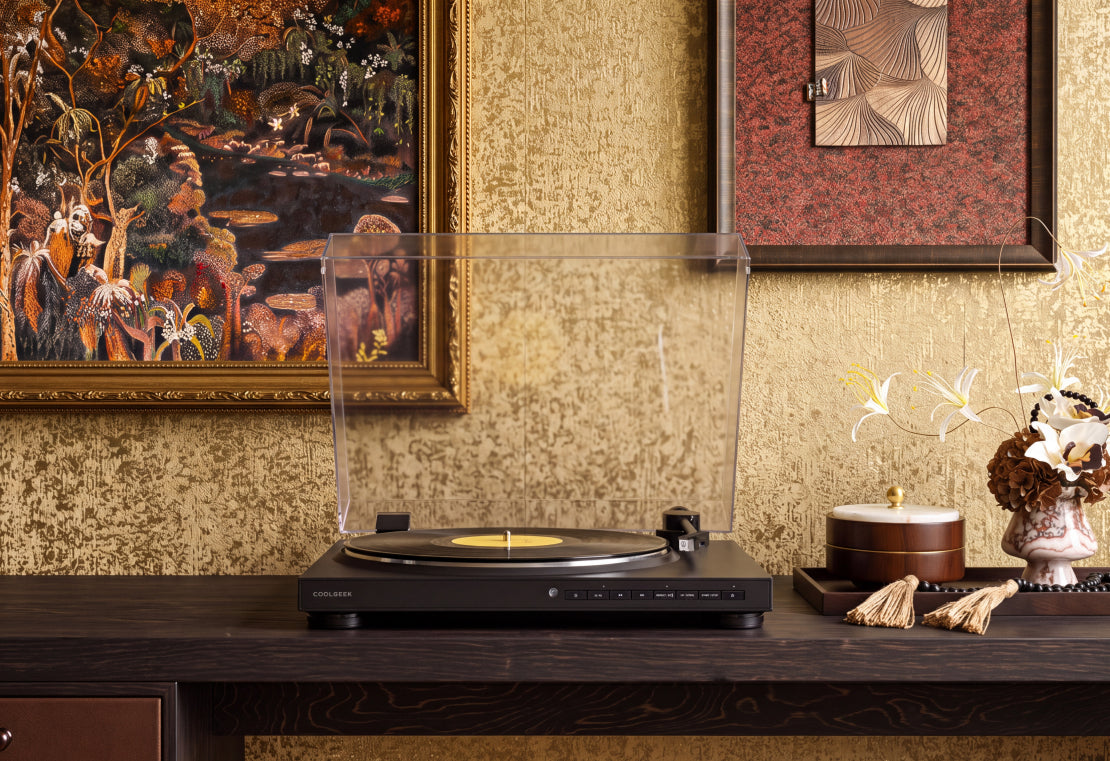
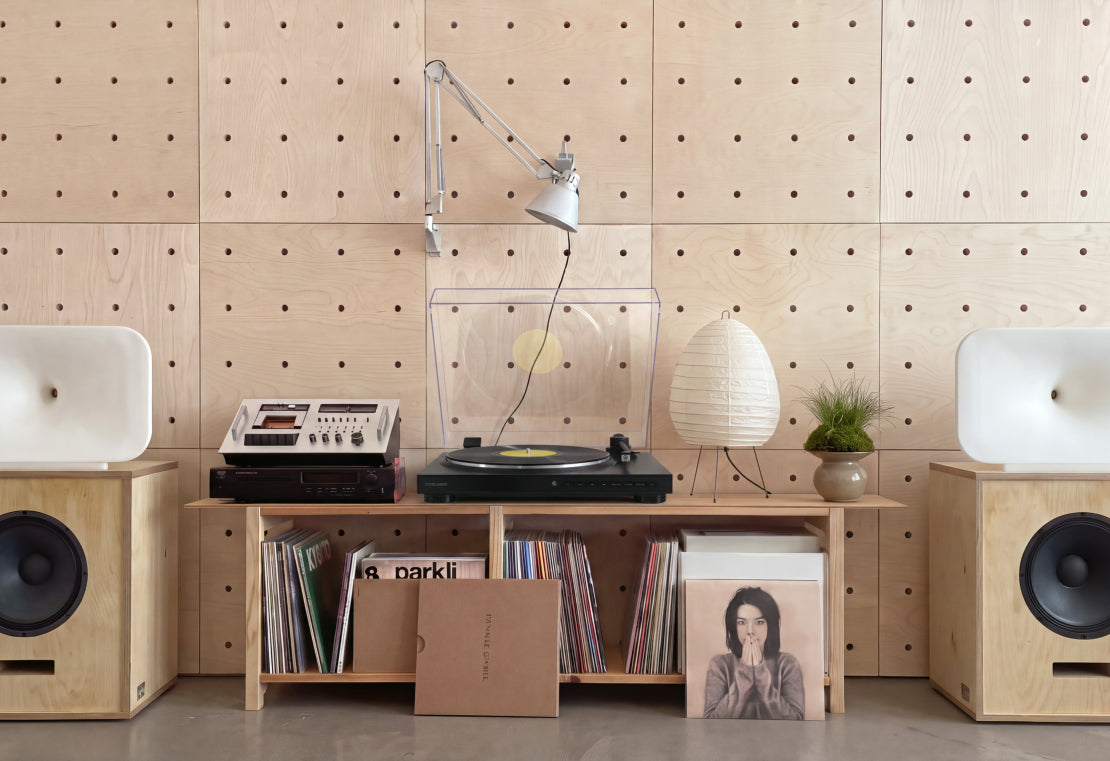
A turntable such as TS-01 should not feel like something temporarily placed on furniture. It should feel like part of the furniture composition itself.
A vertical turntable like VS-01 can bring music into the visual field, turning the record into both a sound source and a design element.
When music becomes visible, the room becomes more personal.
 Materials Create Atmosphere
Interior design is built through materials.
Wood brings warmth.
Metal brings precision.
Fabric softens the room.
Glass and acrylic carry light.
A record or CD adds memory and personal taste.
Audio products should speak this same material language.
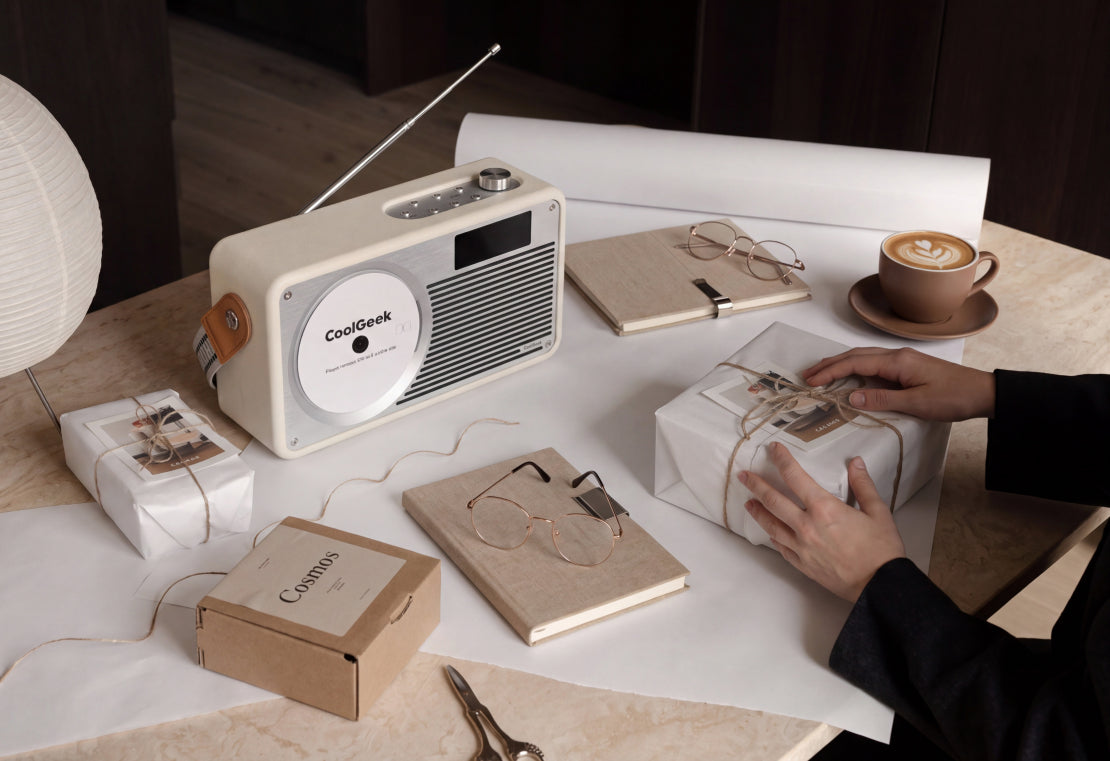
A product like R1 naturally connects with interior design because it already carries the feeling of furniture: a rounded form, fabric texture, wood-like warmth, and a side-table presence.
M1 takes a different approach. It frames the CD like an object worth displaying, allowing music to become part of the wall, shelf, or cabinet composition.
This matters because people do not only decorate homes with furniture.
They decorate homes with meaning.
A favorite album, a visible CD, a record on display, or a music player beside a chair can say as much about someone as a painting or a book collection.
Music can become part of the visual story of a home.
 Sound Changes the Feeling of a Room
Interior design is not only about what we see.
It is also about what we feel.
A room with harsh lighting feels different from one with warm light. A room with soft textiles feels different from one filled with hard surfaces. In the same way, a room with music feels different from a silent room.
Music adds movement to still space.
It can make a kitchen feel alive in the morning, make a living room feel slower at night, or turn a reading corner into a private listening ritual.
This is where audio products become more than functional devices.
A product like VS-02 can sit casually in everyday spaces, bringing music into relaxed moments.
R1 can work like both a speaker and a furniture companion, placed beside a sofa or lounge chair without disturbing the visual balance of the room.
Good audio does not interrupt interior design.
It deepens it.
 Music as Personal Display
People display books because books say something about them.
They display art because art carries taste and emotion.
They display objects collected from travel, family, or important moments because those objects hold stories.
Music deserves the same role.
A vinyl collection is not only storage.
A CD shelf is not only organization.
A favorite album cover is not only packaging.
They are all part of a person’s identity.
This is why products like M1 are especially meaningful in interior design. By making the CD visible, it gives physical music a place in the room. TS-01 and VS-01 also do this through ritual: the record is selected, placed, seen, and heard.
The experience becomes visual, tactile, and emotional.
Music is no longer only background sound.
It becomes part of the room’s composition.
 Designing Homes Around Feeling
The future of home audio is not only about louder sound, smarter features, or more technical specifications.
It is about how music lives with people.
As homes become more curated, people will increasingly look for products that match their taste, support their habits, and remain visually meaningful over time.
The best audio products should not ask to be hidden.
They should sit naturally beside furniture, respond to light, hold memory, and make the home feel more complete.
Because music is not separate from interior design.
It is part of how a room breathes.
It is part of how a home feels.
And when sound, object, and space come together, music becomes something more than entertainment.
It becomes part of living.
Share:
Why Great Audio Products Should Age Like Furniture
Why We Display Books but Hide Music