

 The Shelf Is a Silent Portrait
A bookshelf does more than hold books. It becomes a silent portrait of the person who lives there.
Books show what we have studied, what we return to, what we admire, and what we want others to notice. A shelf can reveal taste, memory, ambition, and even a private history of different life stages.
Music holds the same emotional weight.
A record can belong to a specific summer.
A CD can remember a first apartment.
An album cover can recall a person, a road trip, or a room we no longer live in.
Yet in many homes, music is treated differently. Books are displayed. Music is often hidden—inside apps, drawers, cabinets, or black electronic boxes.
That contrast says something important: we have learned how to make reading visible, but we have not always learned how to make listening visible.
 Physical Culture Has Not Disappeared
The shift to digital life did not erase physical culture.
In 2026, Pew Research Center reported that roughly two-thirds of U.S. adults had read a physical book in the past 12 months, making print the only book format used by a majority of Americans. The Association of American Publishers also reported that U.S. publishing revenues reached $32.5 billion in 2024, with trade consumer books growing to $21.2 billion. Books remain physical, visible, and commercially strong.
Music shows a similar but quieter story. RIAA reported that in 2025, U.S. vinyl sold 46.8 million units, compared with 29.5 million CDs, while vinyl also surpassed $1 billion in U.S. sales. These figures do not mean everyone is returning to physical music. But they do prove that physical music still carries value in a streaming-led world.
So the question is not whether physical music matters.
The question is: why do we still design so many homes as if music should disappear?
 Music Became Invisible by Convenience
Streaming made music easier to access, but it also made music easier to overlook.
When music lives only inside a phone, it becomes a service. When albums become thumbnails, they lose scale. When speakers become hidden cylinders or black boxes, the ritual of listening becomes less visible.
Convenience is useful, but it can flatten emotion.
A book on a table invites the hand.
A record sleeve invites the eye.
A CD cover invites memory.
This is why physical music deserves better design language. It should not be treated only as storage media or playback equipment. It can become part of the home’s visual memory.
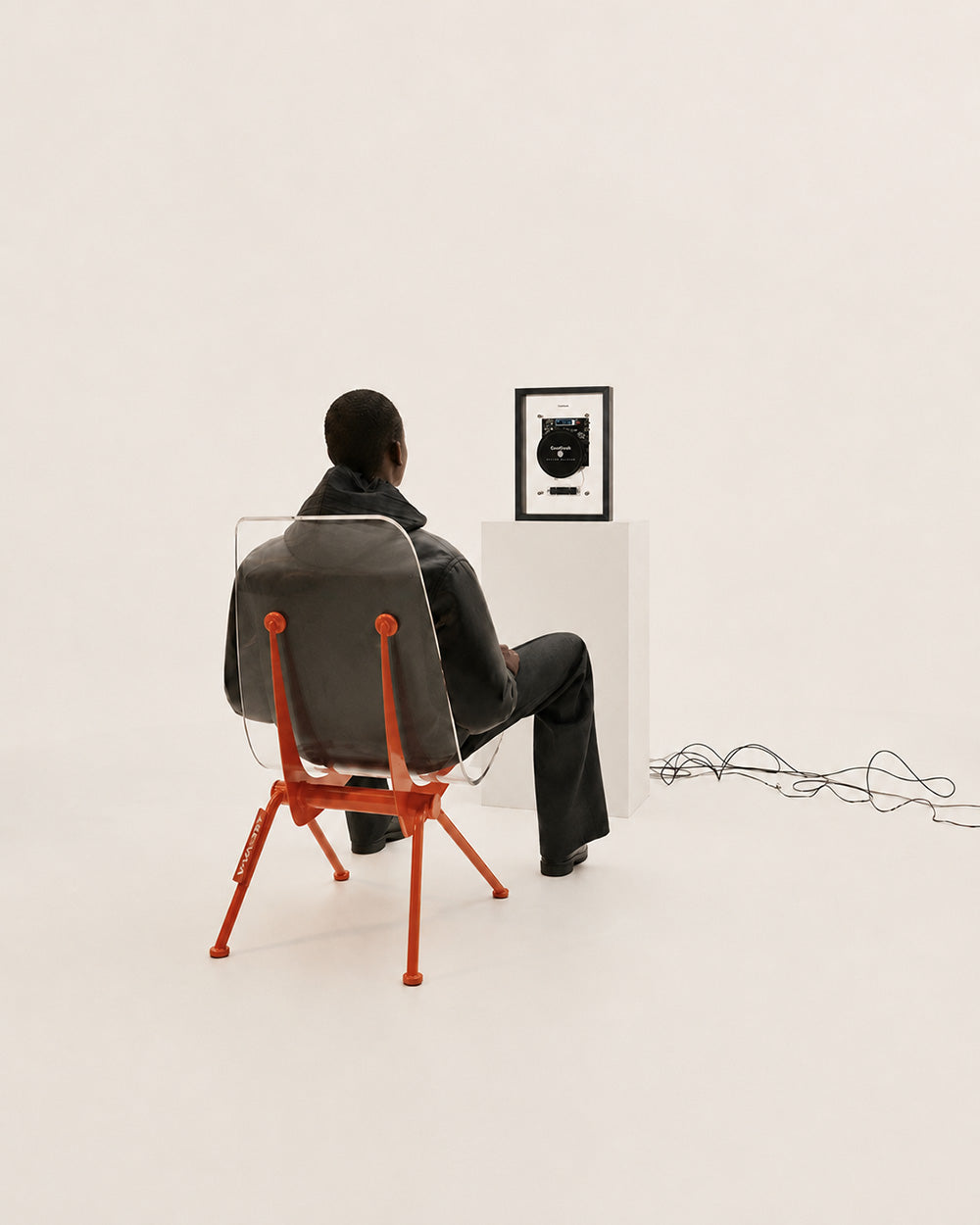
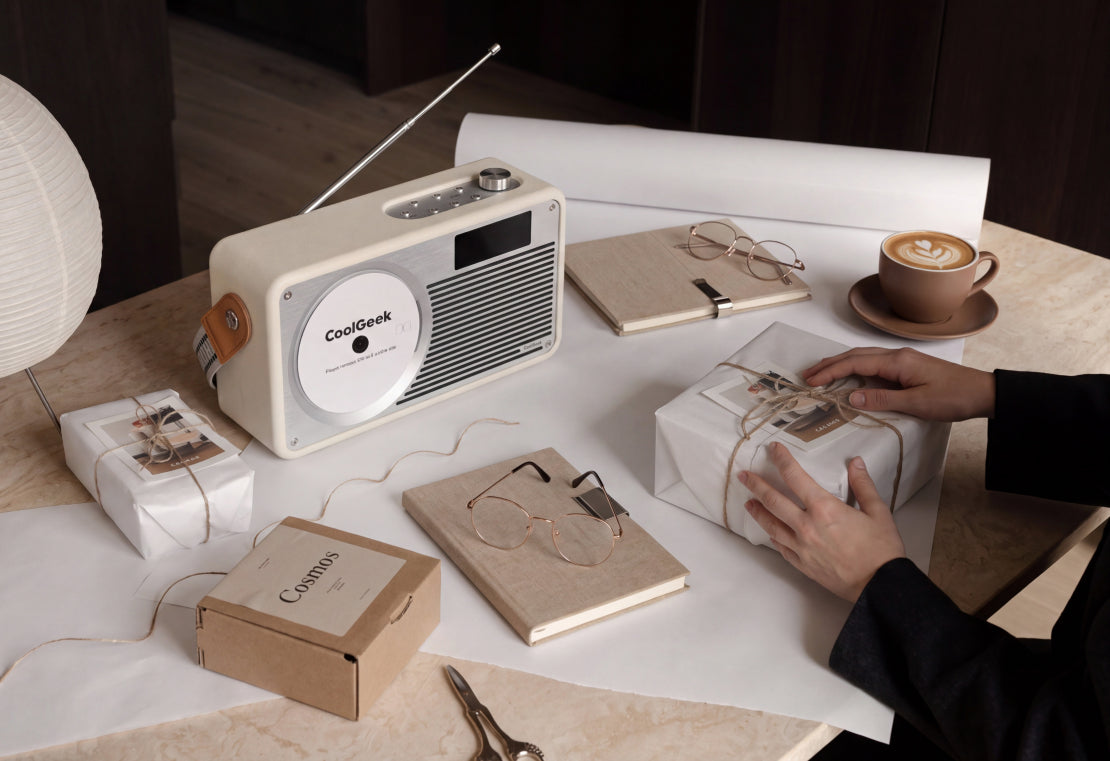
A product like M1 works in this direction because it gives the CD a face again. The disc is not buried inside a drawer. It becomes framed, visible, and part of the room’s composition.
 The Problem Is Not Sound. It Is Presence.
Many audio products sound better than they look at home.
They may be powerful, precise, and well-engineered, but visually they still speak the language of equipment: boxes, ports, screens, buttons, cables, and technical surfaces.
A home speaks a different language.
It uses wood, fabric, light, proportion, art, books, and objects with personal meaning.
When audio products ignore that language, they become something to hide. When they understand it, they can become something to display.
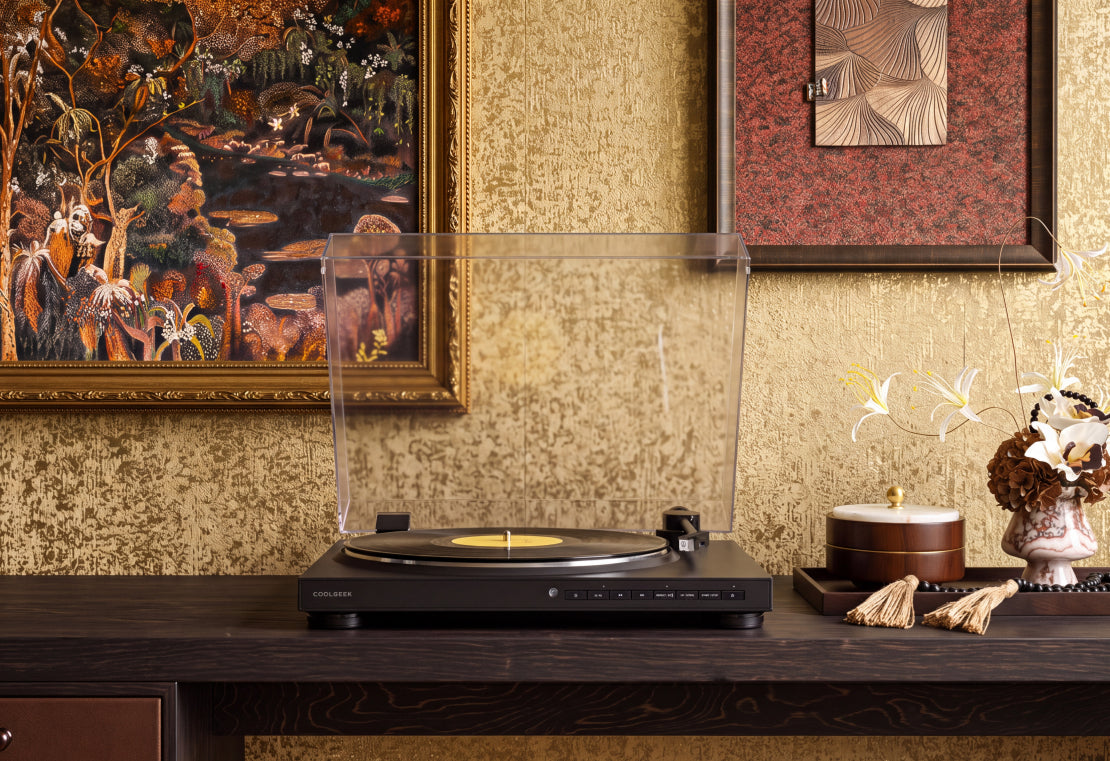
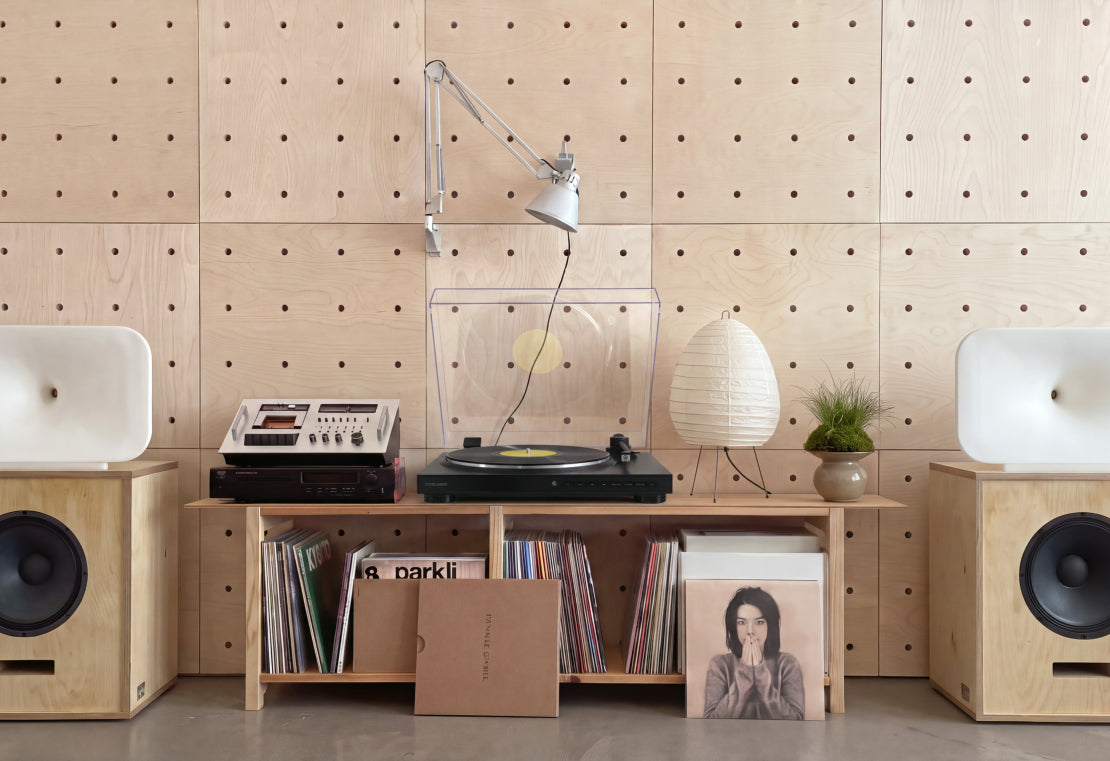
This is where products like TS-01 matter. A turntable should not feel like machinery temporarily placed on furniture. It should feel like a listening object that belongs beside books, records, lamps, and daily life.
VS-01 offers another way forward by making the record itself visible. It turns music into motion, and motion into atmosphere.
 Display Changes Behavior
What we display, we return to.
A visible book is more likely to be opened.
A visible record is more likely to be played.
A visible CD is more likely to be remembered.
Display is not decoration alone. It is a form of invitation.
When music is visible, listening becomes less automatic and more intentional. We choose an album instead of letting the algorithm continue. We notice artwork. We share a memory. We create a small pause in the day.
That is something digital convenience often struggles to create: a moment.
For COOLGEEK, this is not about nostalgia. It is about giving music a proper place in modern homes. M1, TS-01, VS-01, VS-02, and R1 can serve different listening habits, but they share one larger idea: music products should be designed for rooms, not only for specifications.
 Give Music a Place
We display books because they say something about us.
We display art because it carries taste.
We display family objects because they hold memory.
Music deserves the same respect.
A favorite album should not exist only as a tiny square on a screen. A CD should not always live in a drawer. A record should not be visible only for the minutes it is playing.
Music can be heard, seen, touched, and lived with.
The future of home audio is not only about better sound. It is also about better presence.
Because music is not just background.
It is part of identity.
It is part of memory.
It is part of how a home feels.
Maybe the question is not why we display books.
Maybe the better question is: why did we ever agree to hide music?
Share:
Music as Part of Interior Design
Why Collecting Music Never Goes Out of Style